taught by Dr. Katherine Ellison | Spring 2016
Held entirely in Milner’s Special Collections Library, this graduate seminar on archival research methods and digitization was a hands-on workshop in best practices for digitizing any historical artifacts from any period or discipline, from literary texts to technical documents, writing manuals, graphic novels, children’s literary texts and author collections, accounting records, maps, paper dolls, you name it. Graduate students from all disciplines of English Studies, History, and Communication published an electronic edition of an artifacts using best practices in current digitization of historical documents. Student choices of artifact(s) depended upon research specializations and the unique needs for digital editions in their fields, and their projects provided vital resources for our Special Collections Library, which houses invaluable texts, objects, and images that are not publicly accessible. Participants learned document handling, scanning and optical character recognition (OCR), bibliographical methods, annotation, scholarly editing, and encoding options, including the Text Encoding Initiative (TEI). We also educated ourselves about the process of seeking funding for digital projects and discussed grant opportunities and proposal writing strategies. Finally, we attended to not only the practical but also the theoretical, surveying the rich traditions of digitization (reaching back to the distant past, not just the 1980s), read past and current theories of media and digital culture, and experimented with bold new directions in artifact digitization, such as 3D modeling and VR technology.
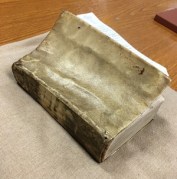
Pontani Opera, by Laura Rocco
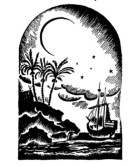
H.C. Adams’s The Traveller’s Tales, by Julie Navickas
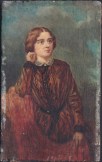
The Life of Jenny Lind, by Su Yin Khor
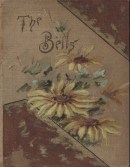
Poetry by Poe, by Andrea Berns
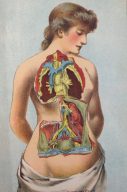
The Ladies’ New Medical Guide, by Krista Roberts
Children’s Nineteenth-
Century Annuals: An
 The Digital Archival Curation Center